Country
China
I have 2 sourced drinks connected to China. The label on each card says how: where it began, what the country is known for, what people drink there, or where the origin is disputed.
Drinks of China
Signature drinks and regional ones, with the evidence behind each. A drink marked non-alcoholic has no alcohol in the traditional serve.

Baijiu Ganbei
IconicRegional drink
Baijiu poured neat at room temperature into small cups or glasses and drunk with food. At a banquet the host starts a toast, glasses are clinked and the guests finish the cup in one go after the ganbei call.
Wikipedia describes a formal sequence in which a greeting shows respect to the host, a moderate amount is poured on the ground to show gratitude to nature, the drinker sips and shares an opinion, and the cup is finished in one go after ganbei. The ceremonial parts are often ignored among friends or family. Baijiu is usually distilled from fermented sorghum and typically runs 35 to 60 percent alcohol by volume.
Made with: baijiu.
Confidence: lowEvidence: en.wikipedia.org (opens in a new tab), mrporter.com (opens in a new tab)
Warmed Shaoxing Huangjiu
Shaoxing, Zhejiang
IconicRegional drink
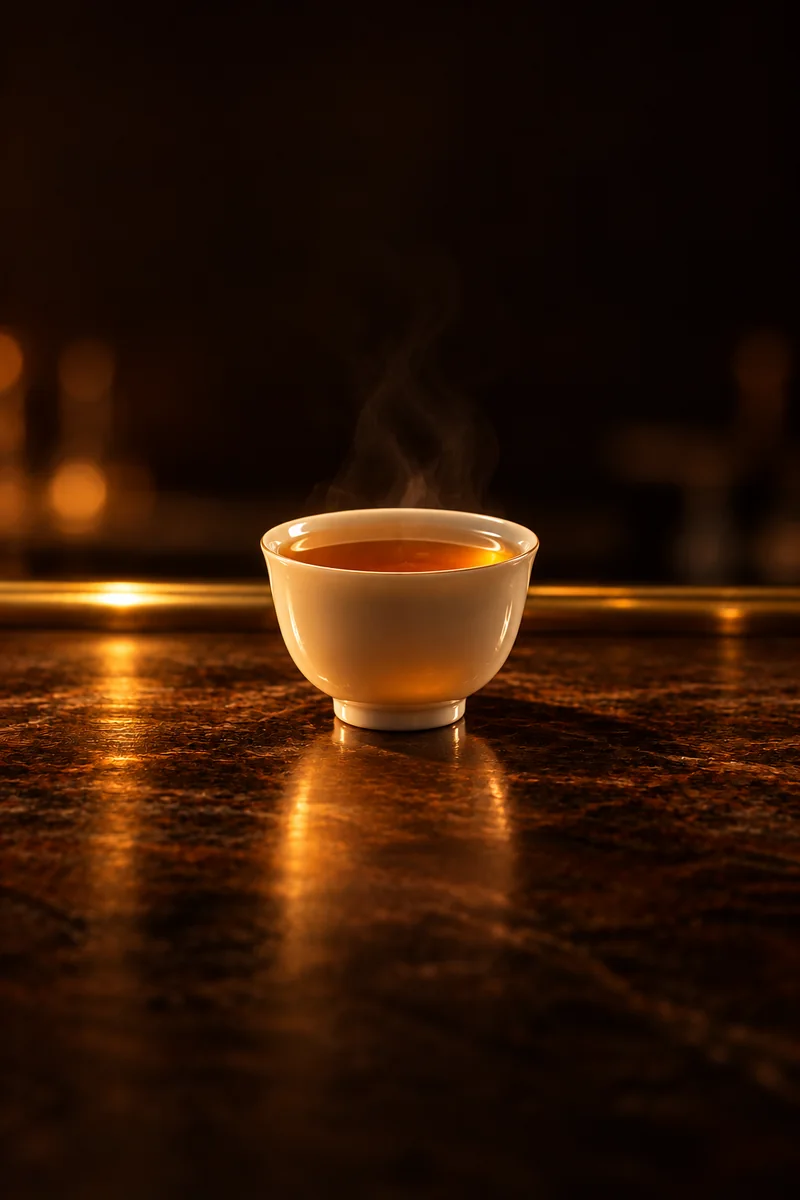
Amber rice wine from Shaoxing in Zhejiang, commonly drunk warm. One travel guide describes setting a flask of the wine in a container of hot water until the flask feels slightly hot in the hand, then pouring it into a small porcelain cup, and gives 40 to 50 C as the temperature believed to bring out its aroma. Versions promoted in other provinces are mulled with plum, ginger and brown sugar.
Wikipedia notes huangjiu is most popular in East China with a strong presence in the Jiangnan area, and says huadiao jiu originates from Shaoxing in Zhejiang. The reddish tint of these wines comes from red yeast rice, and in summer sweet huangjiu is also drunk chilled or on ice. No source found gives a date for the warm-service custom.
Made with: Shaoxing huangjiu (yellow rice wine).
Confidence: lowEvidence: en.wikipedia.org (opens in a new tab), beijing-kids.com (opens in a new tab)
Map data: Natural Earth, public domain.